

Robotic Polishing Machine for High-Precision Surface Finishing
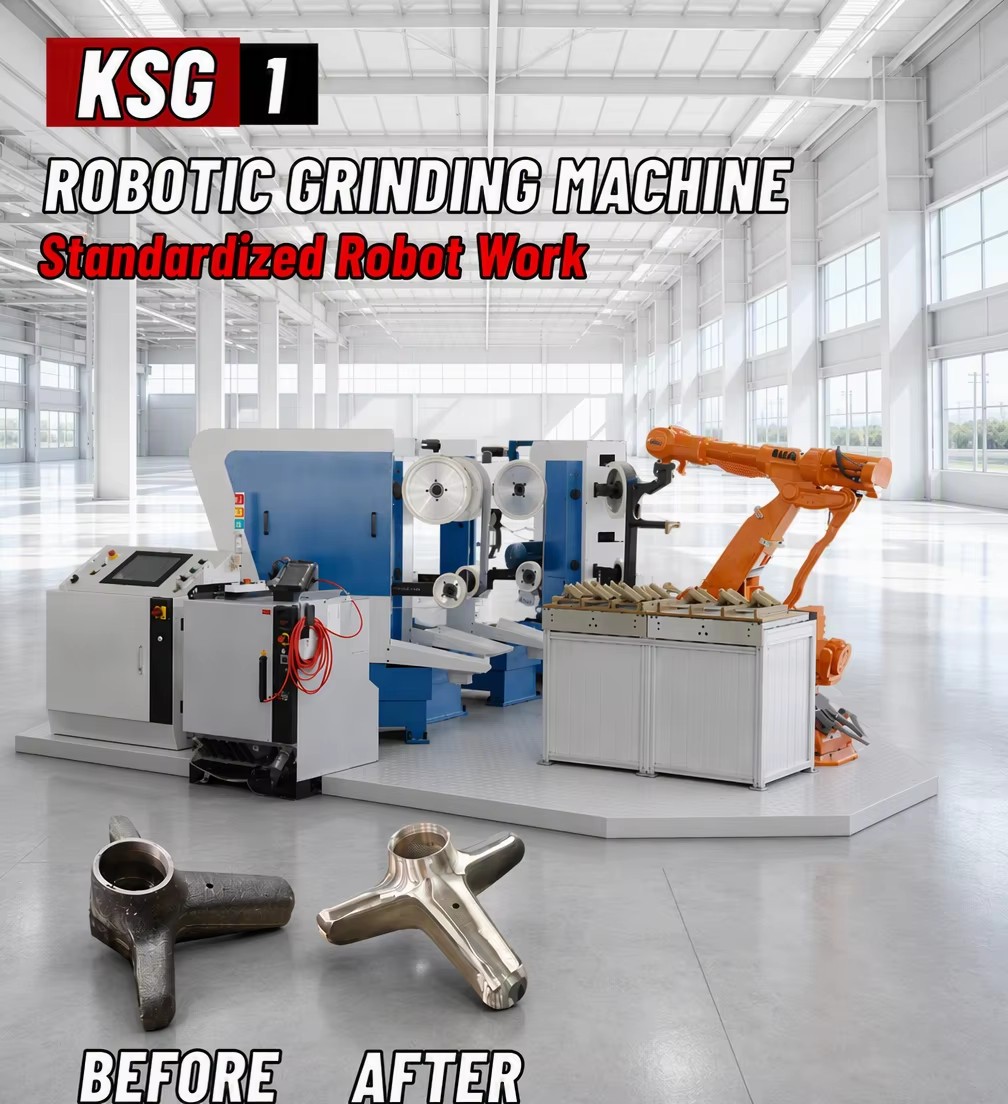
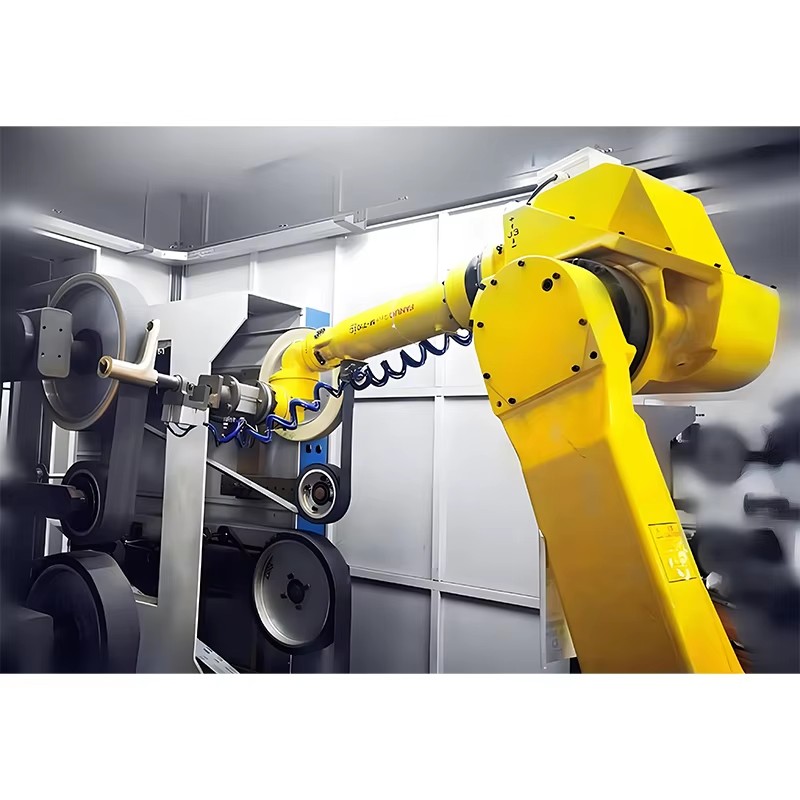
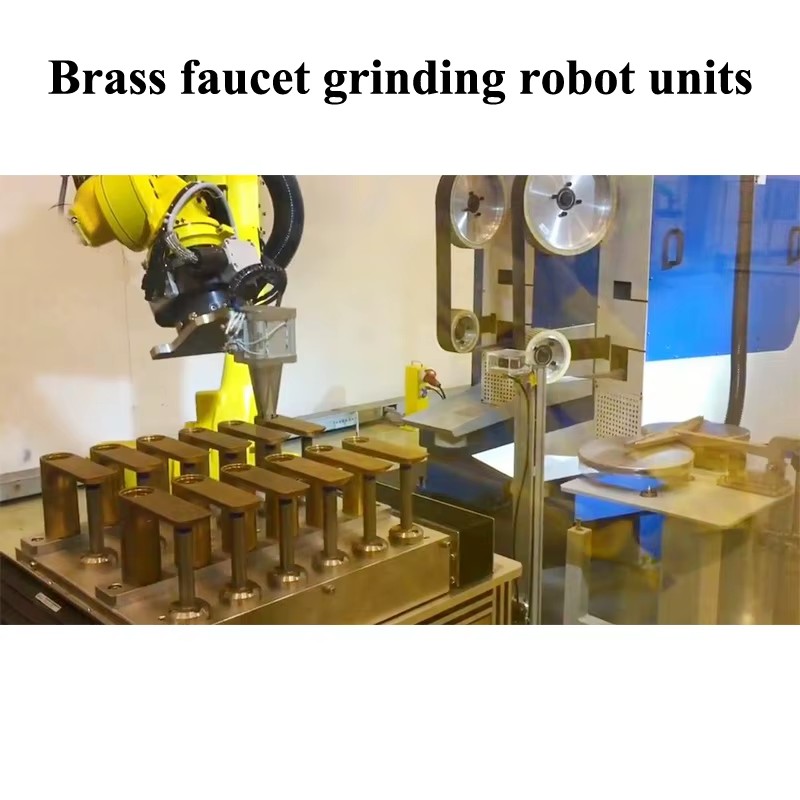
| Robotic Polishing Machine | ||
| Contents | KSG—1 | DL-Z550-B |
| Products Name | Robotic Polishing and Grinding Machine | 2350*2100*1860mm |
| Place of Origin | Fujian | 2000kg |
| Condition | New | 165L |
| Technology | Floating Force Control System | 150kg |
| Polishing Material | Stainless Steel, Copper, Aluminum, Metal | Φ550mm |
| Rated Power | 380V | ≤280mm |
| Total Power of Machine | 20 kw | |
| Operation Mode | Full Automation | 40-60KPa |
| Customization | Fixture, Tooling, Process Adjustable |
Professional Robotic Polishing Machine Manufacturer for Foundry Automation
FAQ
Q1. How do I choose the right polishing machine for my workpieces?
A: Selection depends primarily on the material, shape, and production volume of your workpieces. Material: Metals like stainless steel or aluminum require high speeds and specific compounds, while wood or plastics need lower speeds to prevent burning. Shape: Flat surfaces are best for flat polishers; tubes require cylindrical polishers; complex irregular shapes are best handled by 6-axis robotic polishing systems. Volume: Manual machines suit small batches, while fully automatic or CNC machines are recommended for high-volume production lines.
Q2. What is the difference between Rotary and Orbital (DA) polishing machines?
A: Rotary: High power and high cutting force, ideal for removing deep scratches or heavy oxidation. However, it requires skill to avoid leaving "swirl marks." Orbital (Dual Action): Mimics a hand-circling motion with lower heat generation. It is safer for the workpiece and perfect for fine polishing and enhancing final gloss.
Q3. How can I control the temperature during the polishing process? A: Heat from friction is normal, but overheating can damage the workpiece (e.g., metal tempering or plastic deformation). To control it: 1. Use a machine with Variable Speed Control to adjust RPM according to the stage. 2. Keep the wheel/pad moving; never stay in one spot for too long. 3. Use high-quality polishing compounds or apply coolant/spray to assist with heat dissipation.
Q4. What are the common polishing consumables, and how should they be paired? A: Common consumables include: Polishing Wheels: Sisal wheels (rough/heavy cutting), Cotton wheels (medium polishing), and Silk or Wool wheels (fine/mirror finishing). Polishing Compounds/Wax: Often color-coded, such as Green (mirror finish for stainless steel), White (medium finish), and Red(heavy cutting).
Abrasive Belts/Flap Wheels: Used for initial grinding to remove burrs.
Q5. Why is my polishing machine vibrating excessively? A: Excessive vibration is usually caused by: 1. The polishing wheel or pad is not centered or is out of balance. 2. Worn-out spindle bearings. 3. Uneven wear on consumables (like a lopsided cotton wheel). 4. An unstable base or loose mounting bolts on an uneven floor.
Q6: Can automatic polishing machines completely replace manual labor? A: Automatic machines far exceed manual labor in terms of consistency, efficiency, and safety, especially for large-scale standardized parts. However, for extremely intricate artistic pieces, some manual touch-up may still be needed. The current industry trend is "Robotic Polishing + Minimal Manual QC."
Q7: How do I maintain the machine to extend its service life?
A: Cleaning: Clean accumulated dust daily, especially from the motor vents, to prevent overheating. Lubrication: Regularly check the spindle bearings and transmission chains; apply lubricant as scheduled. Inspection: Conduct weekly checks on power cords and ensure the emergency stop button is fully functional.
Q8: How do I resolve "haze" or "rainbow streaks" on the surface after polishing?
A: This is often caused by compound residue or over-polishing. Solution: Switch to a finer polishing wheel, reduce the amount of compound used, or use a specialized cleaning agent to remove surface grease. Also, check if the RPM is too high, causing localized overheating.
Q9: Do you support voltage and frequency customization for different countries?
A: Yes, as an international supplier, we support various voltage customizations, such as 110V/60Hz, 220V/50Hz, and 380V three-phase power. Please inform us of your local power requirements before placing an order.
Q10: What safety and dust protection features are included? A: Dust Control: Most industrial machines are equipped with dust collection ports that can be connected to central vacuum systems. Safety Features: Our machines include protective covers, transparent eye shields, emergency stop switches, and motor overload protection devices.


-
Step 1
Payment and order readiness
Minimum order: 1 Units
Payment terms, specifications, and order details are confirmed before preparation begins.
-
Step 2
Preparation
100 days
-
Step 3
Packaging and dispatch
Ocean freight via Maersk · Approx. shipping fee: $ 0.84 for 1 unit · Transit time: Est. 17-24 days
Final packing, freight, and delivery dates are confirmed before dispatch.
Customer reviews
No reviews yet
Be the first customer to review this product.
Write a review
Request custom sourcing
Can’t find what you’re looking for? Share the requirement and our sourcing team will find the right industrial product.