
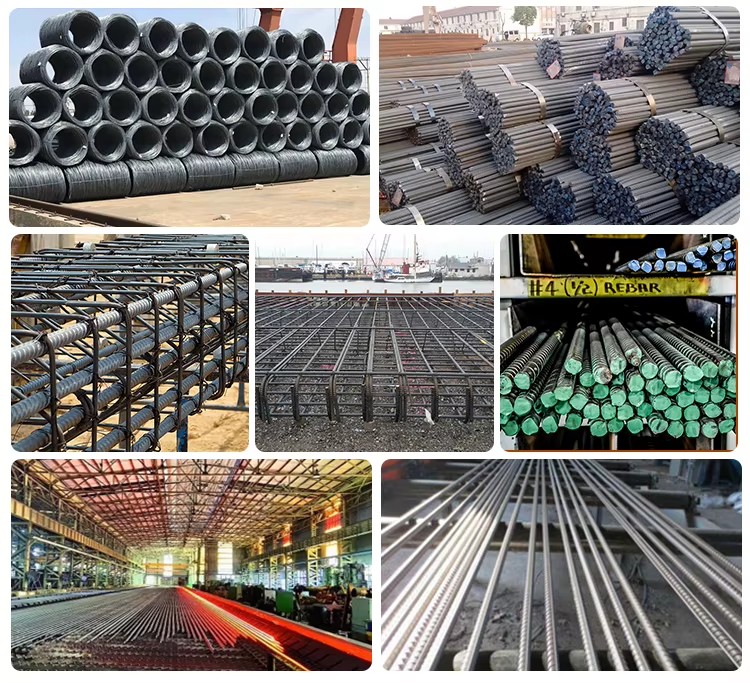

Product details
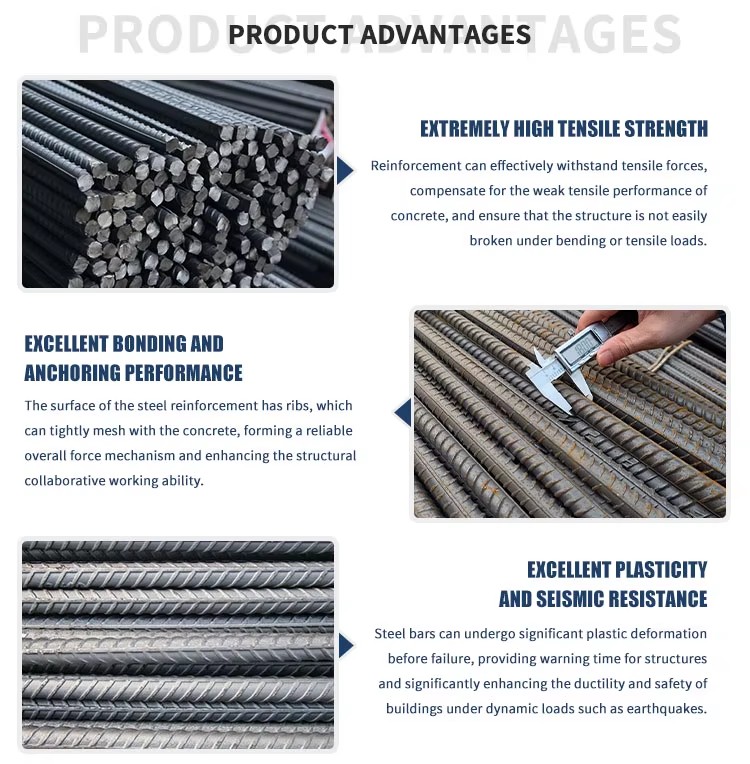
Cost Savings Through Higher Strength:Our high-strength rebar (e.g., CRB600H, 430MPa vs. HRB400's 360MPa) reduces theoretical steel consumption by over 16% for the same load requirements, directly lowering material and shipping costs.
Superior Seismic Safety:Excellent ductility and high elongation allow the rebar to absorb energy during earthquakes, preventing sudden brittle failure and providing reliable structural protection when it matters most.
Faster Construction
Green & Policy-Compliant:High-strength rebar reduces resource use and carbon emissions-CRB600H is listed 's national "Encouraged Category," helping your project meet green building standards and stay ahead of regulations.
Certifications & compliance
CE
Complies with EU standards
Frequently asked questions
Genuine GB rebar has the grade mark and "GB" symbol rolled onto the surface, with a matching tag and mill certificate for each bundle. Use a caliper to measure the inner diameter - a nominal 10mm bar measuring ~8.8mm indicates "shrunk" rebar. Weight deviation testing is mandatory per GB standards, and non-compliant products are prohibited from use. Always verify the three-way match: tag, surface markings, and certificate.
Four checks are mandatory: verify documentation (mill certificate, quality certificate) for matching grade/batch; conduct visual inspection for cracks, oil stains, and excessive rust; perform on-site diameter measurement; and arrange witnessed lab testing - with a maximum of 60 tons per batch for yield strength, tensile strength, elongation, bending, and weight deviation. Seismic grades (suffix "E") require additional tensile/yield ratio tests.
HRB400 (400MPa) is the standard choice for general structures; HRB500 (500MPa) suits high-rise and large-span projects; CRB600H (574MPa, 430MPa design value) offers 16.3% theoretical steel savings over HRB400 and is listed 's national "Encouraged Category" - making it the most economical option when combining material and shipping costs.
Three critical indicators must be met: tensile/yield strength ratio ≥ 1.25, yield ratio ≤ 1.30, and total elongation at maximum force ≥ 9%. Failure on any parameter means the rebar cannot provide reliable seismic protection and should be rejected.
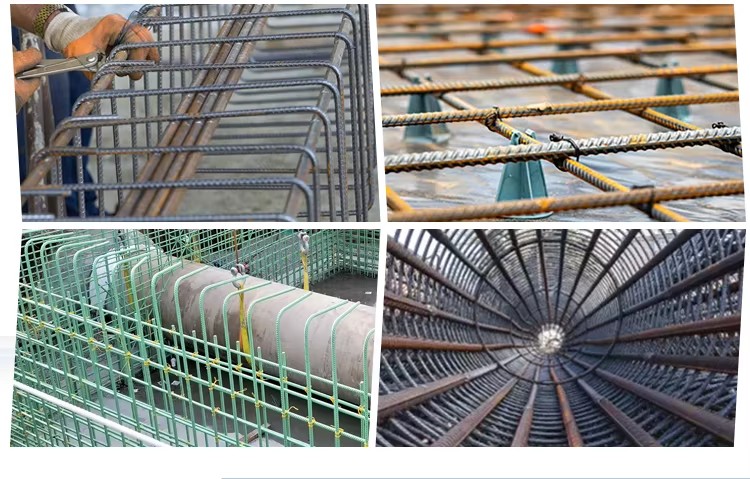
Factory-fabricated to precise specifications, welded wire mesh eliminates on-site spacing errors and missed ties while reducing installation time by up to 54%. This translates to shorter schedules, lower labor costs, and consistent quality - ideal for floor slabs, wall panels, and prefabricated construction.
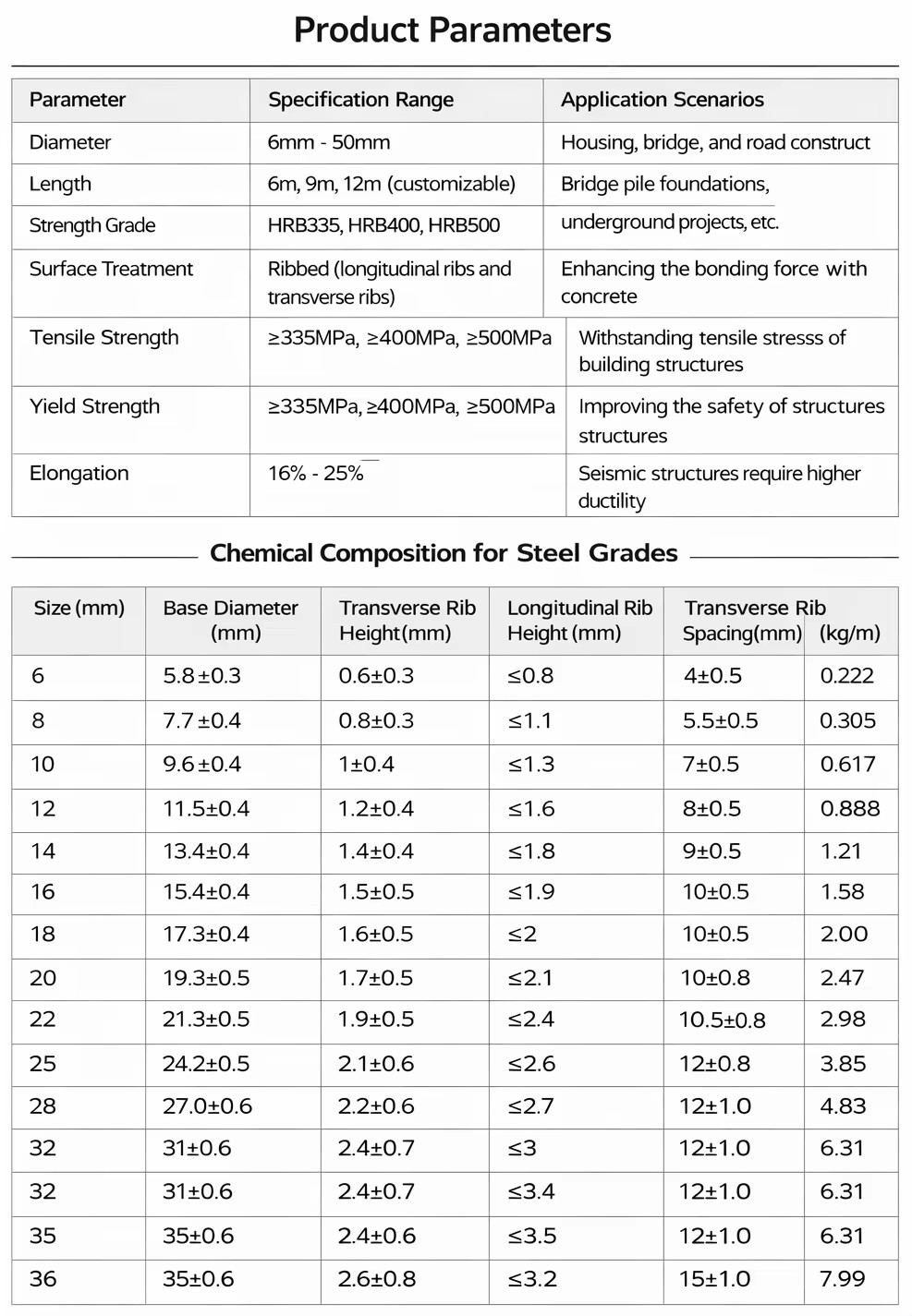
Theoretical weight (kg/m) = Diameter(mm) * Diameter(mm) * 0.00617. A minimum of five samples per batch are tested; if actual weight falls below theoretical weight beyond GB-standard limits (GB 1499.2 or GB 13788), the batch is rejected. A simple weigh-check upon arrival serves as an effective first-line defense against non-standard rebar.
Construction rebar requires production license numbers formatted as XK05-001-***** or XK05-002-*****, verifiable online via the National Industrial Product Production License Public Inquiry System. Note: as of September 25, 2024, cold-rolled ribbed rebar is newly added to the license catalog. Always perform a three-way match: tag, surface markings, and mill certificate must align.
Key issues include: hook non-compliance (straight length < 10d or angle < 135°); rib damage from over-tight straightening machines; insufficient or missed ties; inadequate concrete cover leading to exposed rebar; and over-long exposed threads in mechanical connections. Solutions: calibrate bending machines, adjust straightening rollers, use "figure-eight" tying patterns, install sufficient spacers, and use torque wrenches for threaded connections - with rebar inspection mandatory before concrete