
Cement Plant Flue Gas Hydrogen Generator Carbon Capture, Industrial CO2 Carbon Dioxide Capture Liquefaction Device
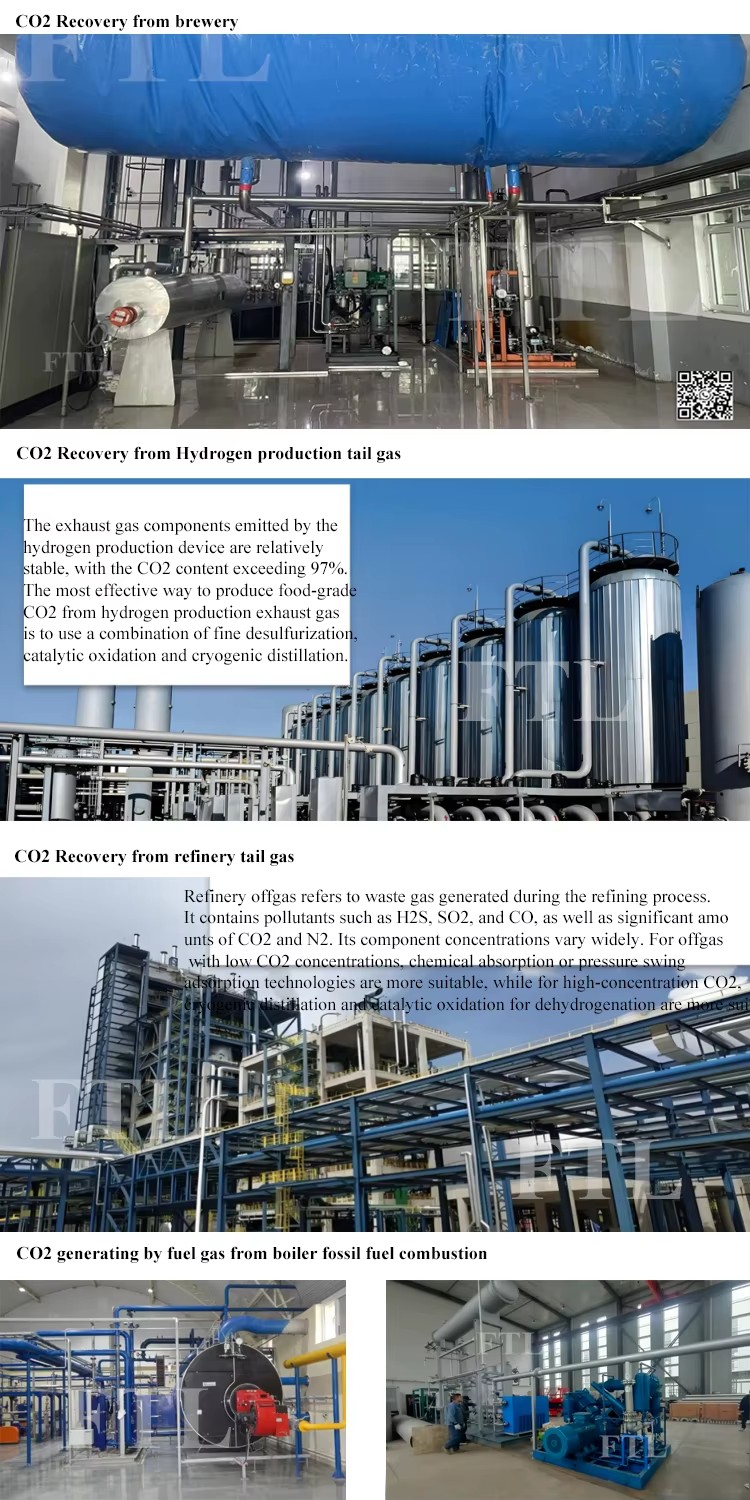
Exhaust gas emitted by industrial equipment such as fertilizer plants, refineries, coal/gas-fired power plants, cement plants, fermentation plants, and ore processing plants is the main source of carbon dioxide (CO2).
CO2 Recovery Plant from Rich CO2 Source
| 1 | Alcohol plant fermentation gas |
| 2 | Methanol plant |
| 3 | Synthesis ammonia (fertilizer) plant |
| 4 | Refineries |
| 5 | Chemical plants |
| 6 | CO2 mine |
| 7 | brewery |
| 8 | F lue gas from lime plant, power plant |
| 9 | Biogas or other syngas |
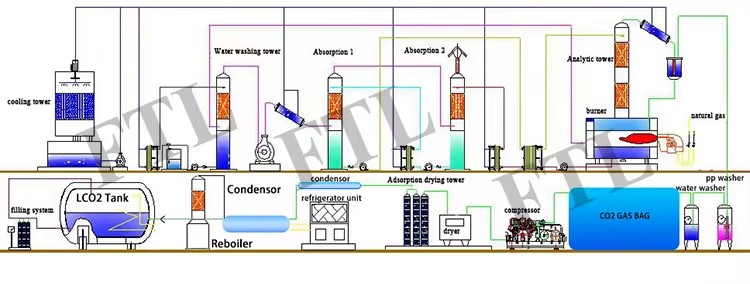
Main technology of CO2 capture, liquefaction and purification: Carbon dioxide capture refers to the process of using physical absorption, chemical absorption, pressure swing adsorption (PSA) and other technical means to treat tail gas with a CO2 concentration between 10% and 50% to reach or exceed 95%, and then finally purify it to the required industrial and food grade through processes such as desulfurization, adsorption, drying, and liquefaction.
Solution A: Chemical Absorption Process
1. Absorption Stage
A gas containing CO2, such as flue gas, is brought into contact with an amine solution or solid amine adsorbent.
In the case of amine solutions, CO2 reacts with the amine to form carbamate.
In the case of solid amine adsorbents, CO2 is adsorbed on the adsorbent surface through physical and chemical adsorption.
2. Desorption Stage
The amine solution or solid amine adsorbent that has absorbed CO2 is heated or depressurized to release the CO2 from the amine.
In the case of amine solutions, heating or depressurizing the carbamate decomposes it, releasing CO2.
In the case of solid amine adsorbents, heating, depressurizing, or introducing other gases can promote CO2 desorption.
3. liquefaction and purification
The desorbed CO2 can be further processed, such as through purification, compression, or liquefaction, to produce a high-purity CO2 product.
The desorbed amine solution or solid amine adsorbent can be recycled and returned to the absorption stage to continue absorbing CO2.
Solution B: Pressure swing absorption (PSA)
Pressure swing absorption (PSA) achieves separation based on the differences in adsorption capacity or adsorption rate of different gases at different pressures. There are two main approaches to PSA: high-pressure adsorption with reduced-pressure desorption, and atmospheric-pressure adsorption with vacuum desorption.
CO2 adsorption separation uses a solid adsorbent to selectively adsorb CO2 from a mixed gas. The CO2 is then desorbed under certain regeneration conditions to achieve CO2 concentration. Generally speaking, the stronger the adsorbent's binding force with CO2, the greater the CO2 adsorption capacity and the better the selectivity, which is more beneficial to the adsorption process. However, this also means a more difficult desorption process and higher regeneration energy consumption. Furthermore, due to its slow temperature regulation, industrial-scale CO2 adsorption separation processes are primarily based on PSA.
Application: Exhaust gas with CO2 content >30%
We also have some other processing technology such as Membrane separation, cryogenic distillation, Catalytic combustion, etc, we will make the professional solution based on customers' detail requirement
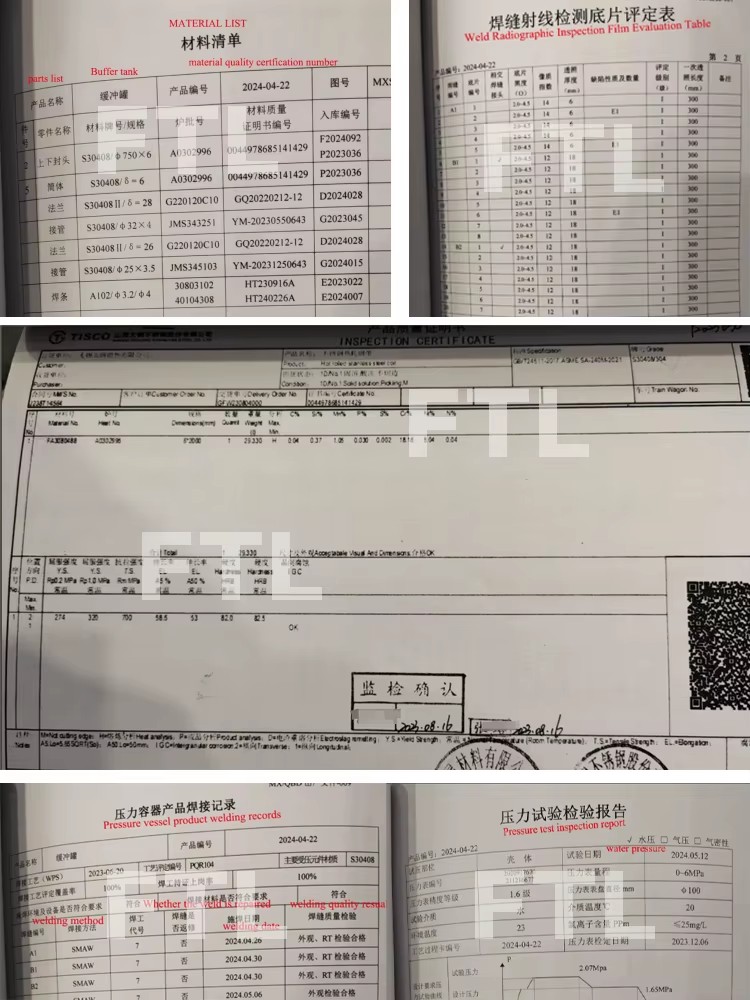
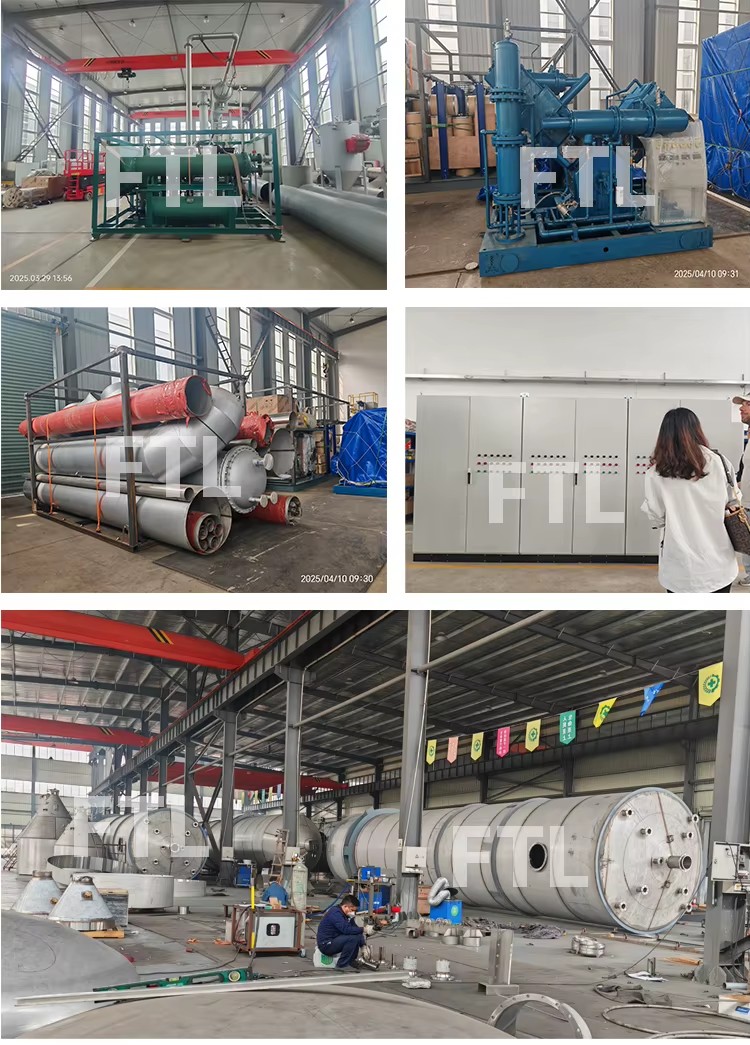
Our Strict testing and manufacturing standard


-
Step 1
Payment and order readiness
Minimum order: 1 Units
Payment terms, specifications, and order details are confirmed before preparation begins.
-
Step 2
Preparation
20 days
-
Step 3
Packaging and dispatch
Packaging details are available on request.
Final packing, freight, and delivery dates are confirmed before dispatch.
Customer reviews
No reviews yet
Be the first customer to review this product.
Write a review
Request custom sourcing
Can’t find what you’re looking for? Share the requirement and our sourcing team will find the right industrial product.