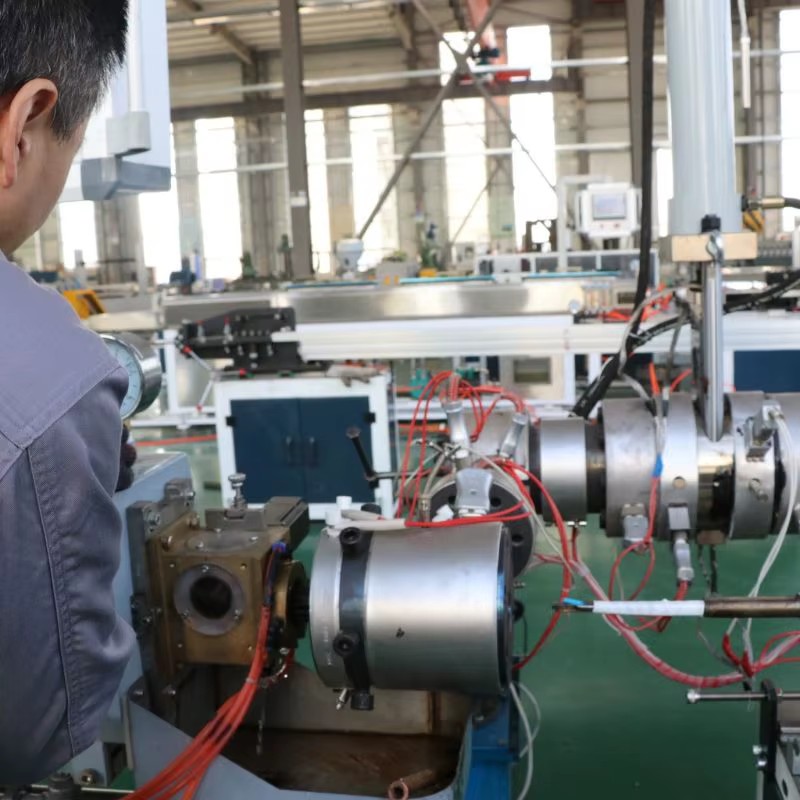
Product details
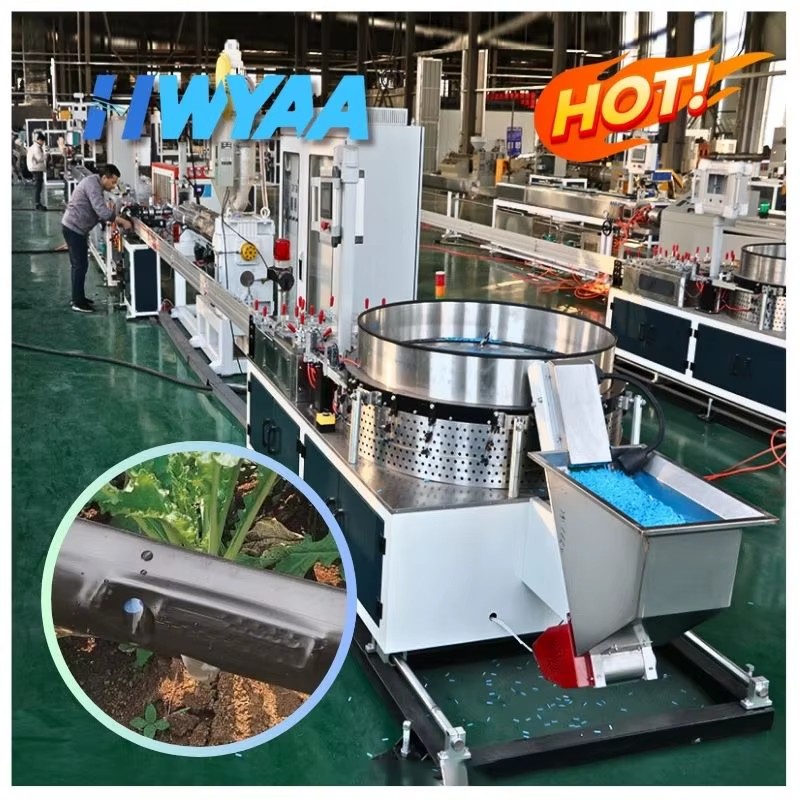
1. Industry-leading production speed: With a stable operating speed of 180-300m/min, it significantly boosts production capacity and shortens the return-on-investment (ROI) cycle.
2. Intelligent PLC control system: Equipped with Siemens/Delta touchscreens, it achieves full-line synchronized control, is easy to operate, and minimizes raw material waste to the greatest extent.
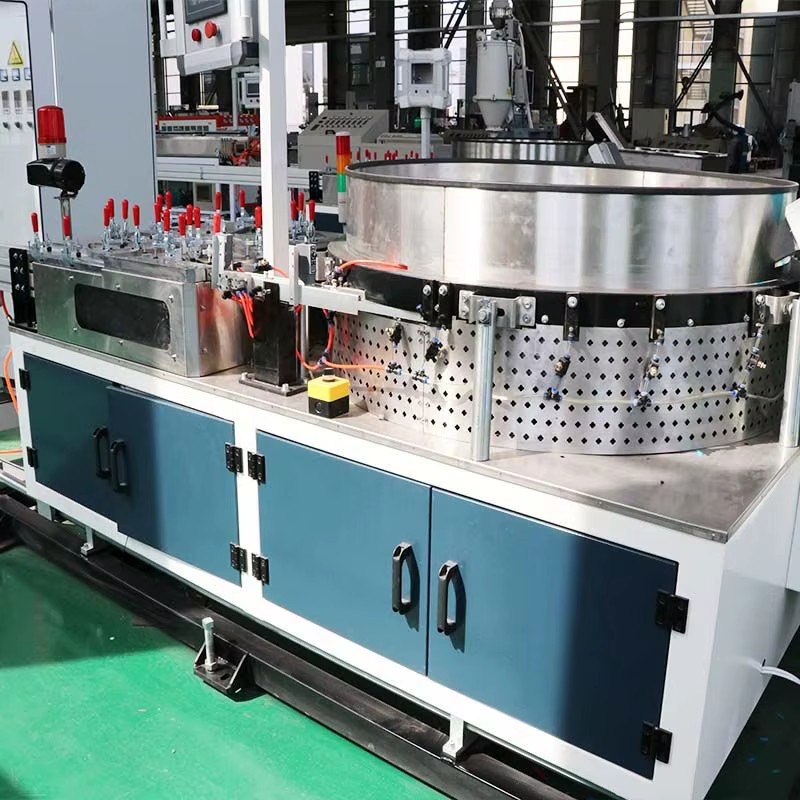
3. Precise drip emitter identification and conveying: The advanced centrifugal screening and high-speed sensor system ensures 100% drip emitter identification accuracy and precise positioning.
4. Stable labyrinth drilling technology: The high-speed mechanical drilling or laser drilling system ensures accurate hole positioning and uniform water output of finished products.
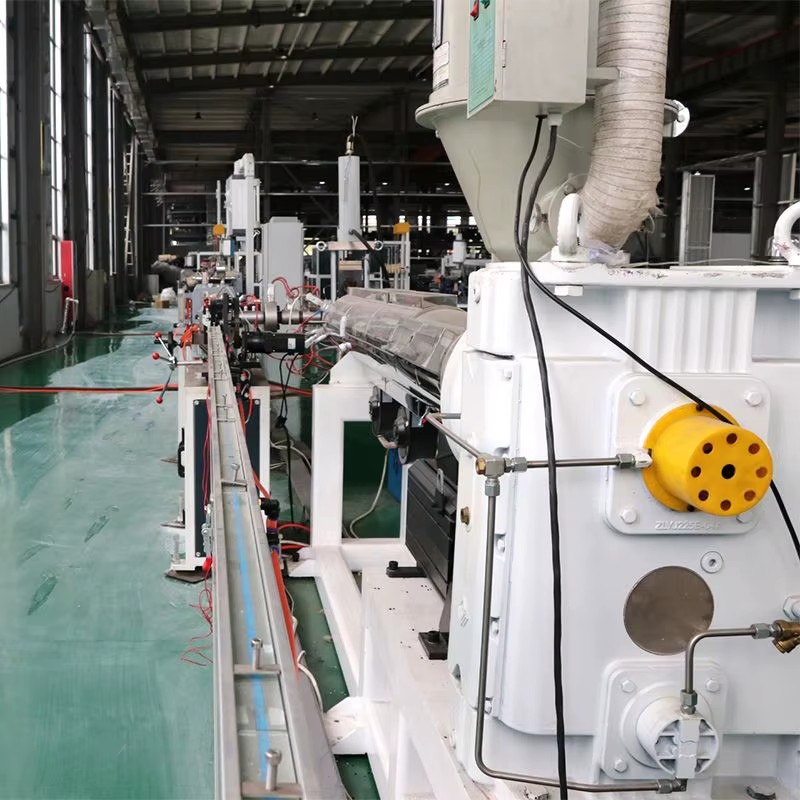
5. Energy-saving and consumption-reducing design: The optimally designed extruder screw cuts energy consumption by approximately 20% compared to traditional models, and supports production using virgin materials or a specified proportion of recycled materials.
6. Automatic dual-station winding: It enables automatic cutting and roll change without machine shutdown, improving equipment utilization rate and labor efficiency.
Certifications & compliance
CE(2)
Complies with EU standards
Frequently asked questions
Drip tape is a thin-walled, collapsible drip irrigation product. Its emitters (drips) are thermally bonded onto the flat tube web at an independent station. Key differences: 1) Structure: Tape is flat, tubing is cylindrical. 2) Wall Thickness: Tape is thinner (typically 0.15-0.3mm). 3) Operating Pressure: Tape operates at lower pressure (typically 0.5-1.0 bar). 4) Lifespan & Cost: Tape is typically used for seasonal field crops, is more cost-effective; tubing is more durable for perennial crops.
The core process is: PE/Recycled material blending & feeding -> Plastic extruder melting & plasticizing -> Die forming flat tube web -> Cooling & sizing -> Online drip bonding (feeding, thermal welding) -> Mechanical precision perforation -> Haul-off -> Online pressure & flow testing (optional) -> Winding. The entire process requires precise synchronization and temperature control.
Standard line speed typically ranges from 200 to 300 meters per minute. Key factors affecting capacity: 1) Emitter Spacing: Closer spacing requires higher bonding/perforation frequency, may limit speed. 2) Tape Specs: Wall thickness, width. 3) Material: Purity and melt flow rate. 4) Stability of bonding and perforation technology. 5) Equipment design (e.g., output, cooling efficiency, synchronization).
Drip Applicator: Uses servo motors to drive drip feeding and welding head, synchronized at high speed with the main line PLC for absolute positional accuracy. Perforator (Laser): Utilizes stable laser source and precision galvanometer scanner, controlled in real-time by PLC based on speed and spacing. Accuracy can reach ±0.2mm. Mechanical punching relies on high-precision cam mechanisms. Regular calibration and maintenance are crucial.
Modern lines are highly automated. The entire process from mixing to winding is controlled by PLC. Operators mainly monitor HMI parameters, load material, change winding positions, perform quality sampling, and handle exceptions. Typically, only 1-2 skilled operators are needed per line.
Recommended workshop dimensions: Length >40m, Width >6m, Height >4.5m (considering winder height). Infrastructure: Stable 380V/50Hz 3-phase power supply (power depends on model, typically 80-150kW), Cooling water circulation system (stable temp & flow), level and strong concrete floor, good ventilation and lighting.
We provide: 1) On-site Installation & Commissioning; 2) Comprehensive Operation & Maintenance Training; 3) One-year Warranty (core components); 4) Lifetime Technical Support (remote guidance, spare parts drawings/list); 5) Priority Supply of Genuine Spare Parts; 6) Optional periodic visits or upgrade services.
Consider: 1) Local main crops & farming practices (determine tape specs & lifespan). 2) Customer price sensitivity (affects virgin/recycled material ratio). 3) Competitive product standards (e.g., flow rate, spacing). 4) Local power & water conditions. 5) Your investment budget & expected ROI. We will recommend the optimal configuration based on this information.