WTEM-3: Delivering Real-Time Subsurface Intelligence for Daily Mine Production and Grade Control
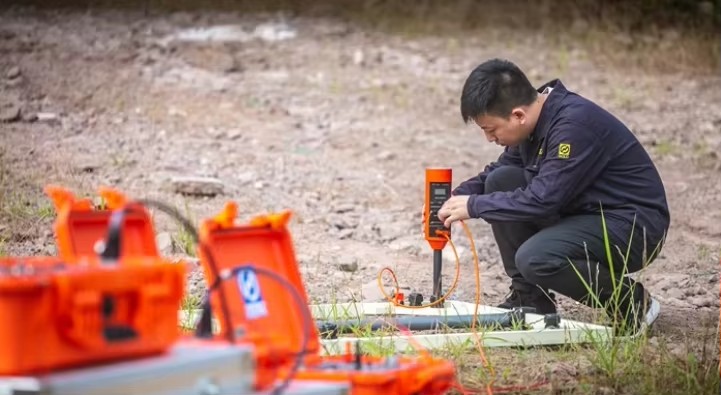
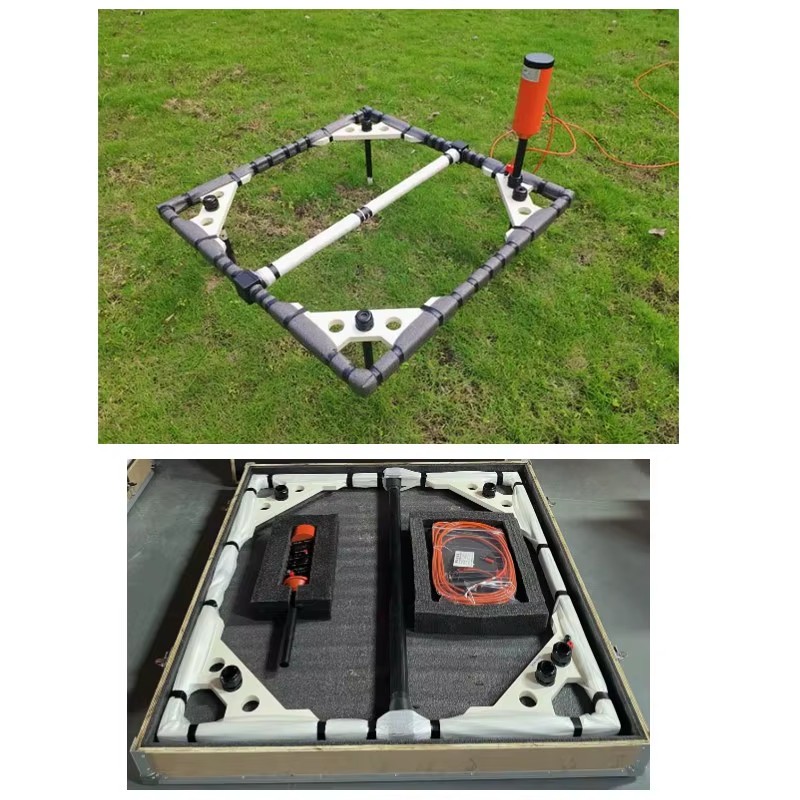
In active mining operations, the transition from exploration to production demands a shift from discovery-focused geophysics to production-support geophysics. The WTEM-3 System has been specifically reconfigured as a mine operations management tool, providing daily, shift-by-shift subsurface intelligence that directly informs ore boundary delineation, blast pattern optimization, and dilution control. Its rugged, vehicle-mountable configuration and rapid data acquisition cycle (under five minutes per scan) allow it to integrate seamlessly into the production workflow, delivering color-coded, operator-friendly resistivity sections to the excavator operator before the bucket hits the muck pile. For the mine engineer, the WTEM-3 transforms geophysics from a periodic, specialized service into an always-on, production-critical sensor that reduces waste, improves mill feed grade, and maximizes resource recovery from every blast.
Face Scanning for Selective Excavation Guidance places geophysical intelligence directly in the loading circuit. Mounted on a bulldozer or a dedicated support vehicle, the system scans the exposed bench face prior to excavation, producing a high-resolution 2D resistivity image overlaid on the face photograph. Sulfide mineralization typically appears conductive (low resistivity), while waste rock or oxidized zones appear resistive (high resistivity). The operator sees, on a cab-mounted tablet, clearly delineated ore and waste zones color-coded for immediate action. The excavator can then dig selectively, loading ore into one haul truck and waste into another, achieving dilution reductions of ten to twenty percent. In mines where ore boundaries are irregular or grade varies rapidly, this capability adds significant value, often translating to millions of dollars in increased metal recovery over a year.
Stockpile and ROM (Run-of-Mine) Pad Grade Estimation extends the system's utility to material already extracted. Run-of-mine stockpiles are notoriously heterogeneous, leading to unpredictable mill feed and recovery swings. The WTEM-3 can survey stockpiles prior to reclaiming, producing 3D resistivity models that estimate the spatial distribution of grade, based on calibrated relationships between conductivity and metal content. The system identifies high-grade pockets for immediate feeding, and low-grade or waste zones to be stockpiled separately or blended. This pre-reclaim grade intelligence allows plant metallurgists to design blending strategies that maintain consistent throughput and recovery, avoiding the costly processing swings that occur when feed grade changes unexpectedly. For processing plants sensitive to feed variability, this capability is not a luxury but a necessity for profitable operation.
Waste Rock Segregation for Environmental Management addresses both economic and environmental concerns. The system can rapidly screen waste dumps to distinguish between potentially acid-forming (PAF) material and non-acid-forming (NAF) material, based on the resistivity and IP signatures of sulfide-bearing vs. sulfide-poor rock. This enables proactive segregation of PAF material for encapsulation or treatment, avoiding costly post-closure water treatment and regulatory penalties. The WTEM-3’s rapid survey speed (hectares per day) makes it cost-effective for routine waste dump monitoring, providing mine operators with the data needed to manage their environmental liabilities proactively rather than reactively.
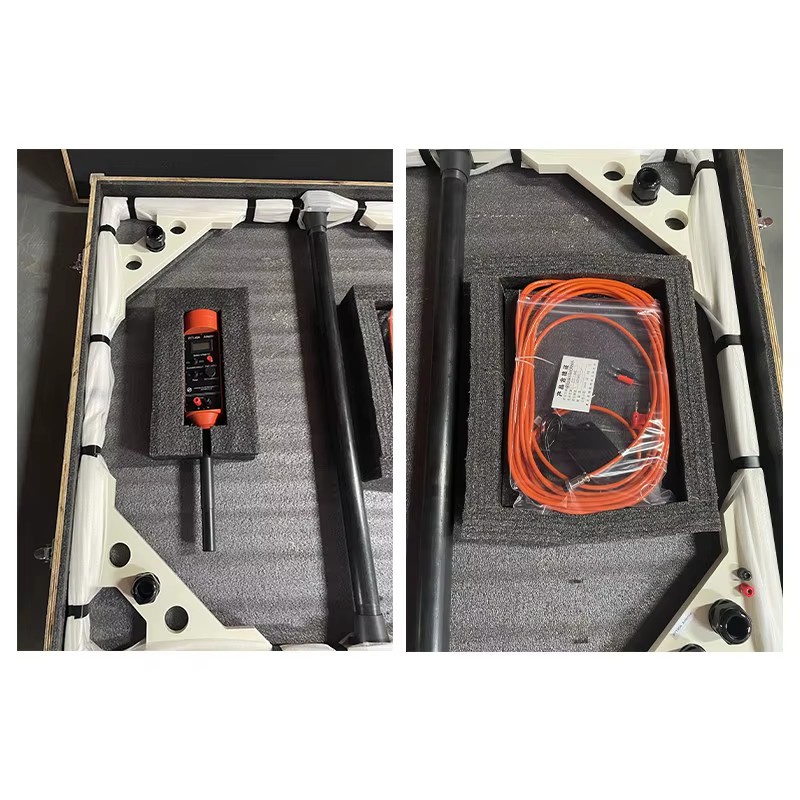
Underground Development Face Assessment provides similar benefits in the more challenging environment of underground mining. The system’s compact, intrinsically safe probe can be advanced to the active development face, where it scans the ground ahead and around the heading. It maps ore zone continuity, pinching and swelling of the mineralized body, and the proximity of hanging-wall or footwall contacts. For narrow-vein mining, where dilution control is paramount, this ahead-of-face intelligence allows the miner to adjust the drift orientation to follow the vein, reducing waste inclusion and maximizing ore extraction. For block caving operations, it provides pre-conditioning assessment of the rock mass ahead of the drawpoint, identifying zones of high fines generation or poor fragmentation. By bringing real-time geophysical intelligence to the working face, the WTEM-3 empowers underground miners to extract more ore and less waste with every blast, improving grade and reducing hoisting and processing costs.
Integration with Mine Planning and Blast Design Software closes the loop between geophysics and mining engineering. The WTEM-3 outputs can be exported directly into mine planning packages, allowing engineers to update geological models with real-world data, design blast patterns that account for localized hardness variations, and plan excavation sequences that minimize dilution. This data-to-action workflow ensures that the geophysical insights are not left in a report but are actively used to optimize daily operations.
Mine Production Optimization Specifications
| Operational Application | WTEM-3 Configuration & Output | Conventional Limitation | Economic Impact |
|---|
| Bench Face Scanning | Vehicle-mounted; 5-min scan; color-coded ore/waste overlay for selective digging. | Blast-hole assays available post-blast; dilution unavoidable. | Reduces dilution by 10-20%, directly improving mill feed grade and revenue per ton. |
| Stockpile Grade Mapping | Surface survey of ROM pad; 3D resistivity model estimating grade distribution. | Grade assumed uniform; heterogeneous piles cause feed swings. | Enables blending to stabilize mill feed, improving recovery and reducing processing costs. |
| Waste Rock PAF/NAF Segregation | Rapid resistivity/IP screening; identifies sulfide-bearing (PAF) zones. | Lab testing on samples; spatial variability missed. | Avoids costly water treatment and regulatory fines by proactive segregation. |
| Underground Face Advance | Intrinsically safe probe; maps ore contacts and vein continuity ahead. | Ore boundaries visible only after blast; follow survey or model. | Improves extraction and reduces dilution by 15% or more in narrow-vein mines. |
| Blast Optimization | Hardness/resistivity maps used to adjust powder factor and blast design. | Uniform blast design across variable ground; over/under breakage. | Reduces oversize and fines, improving loading and crushing efficiency. |
| Environmental Compliance | Baseline and periodic surveys of tailings and waste dumps. | Visual inspection and sparse sampling. | Provides auditable data for regulatory reporting and closure planning. |