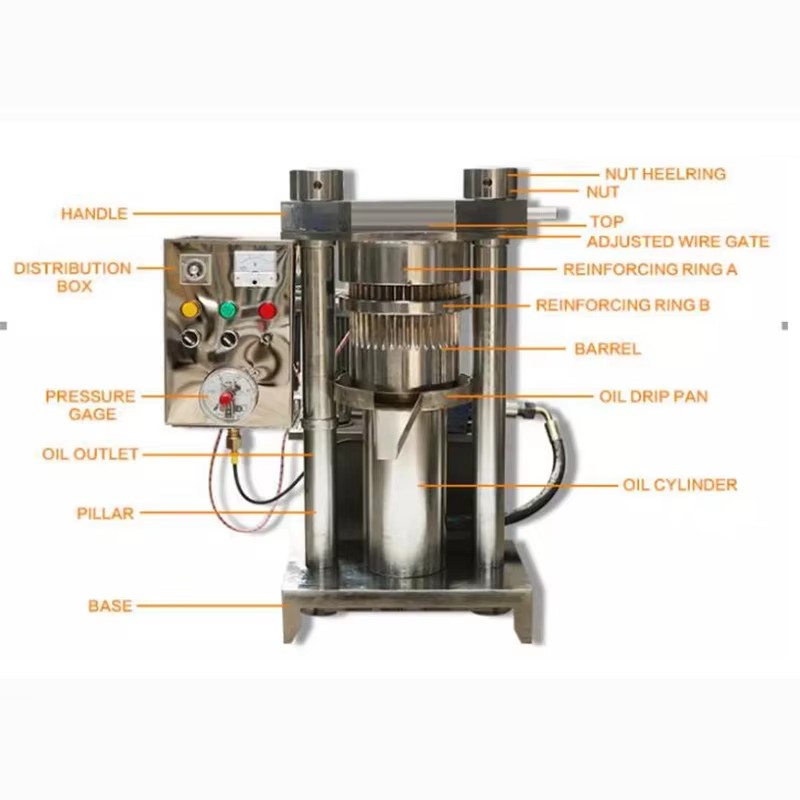
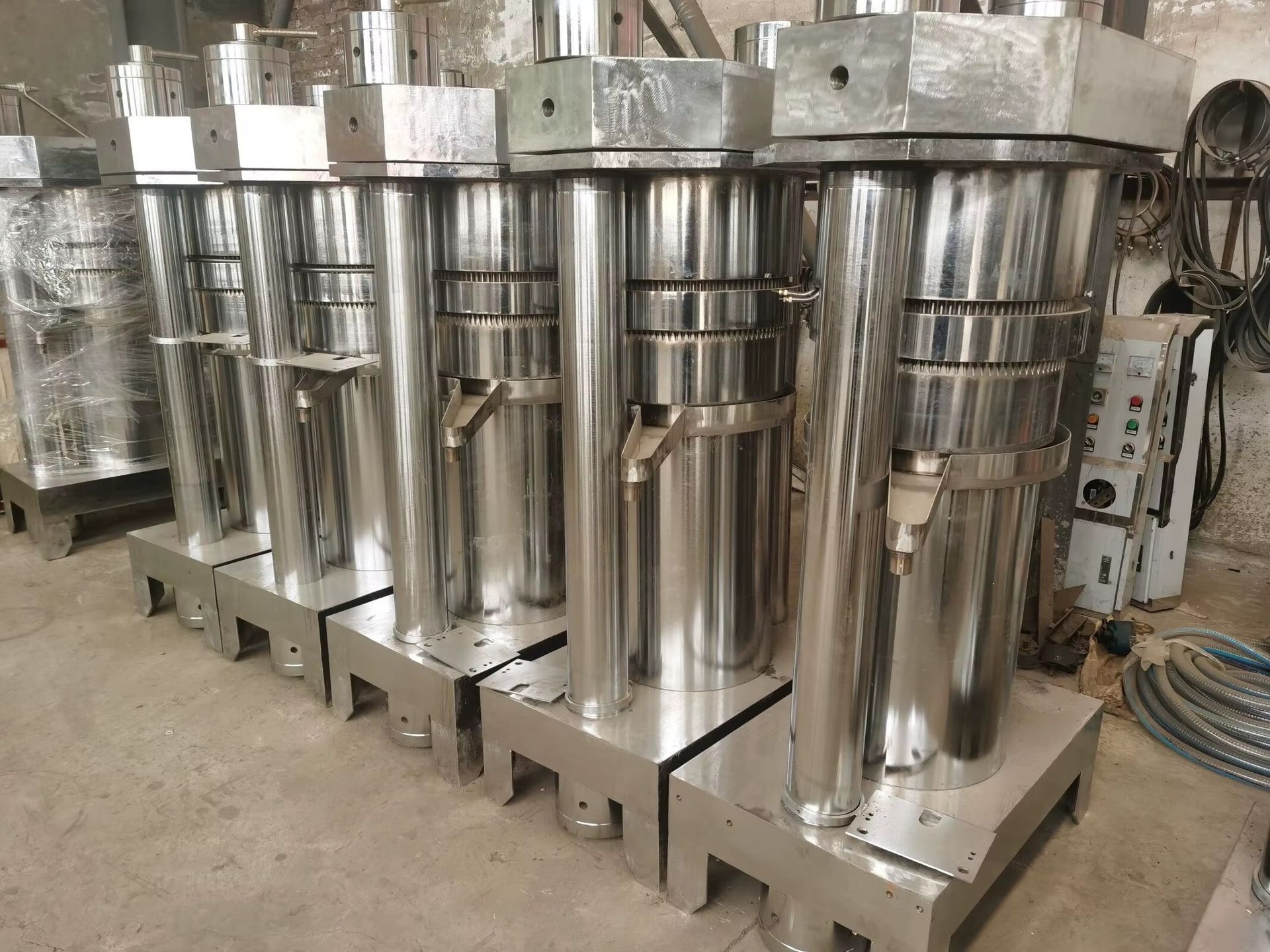
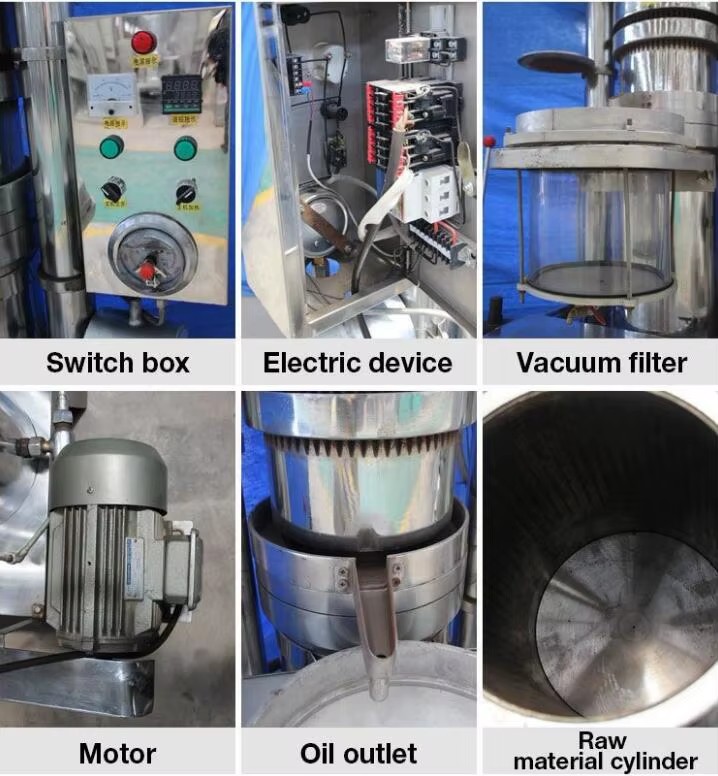
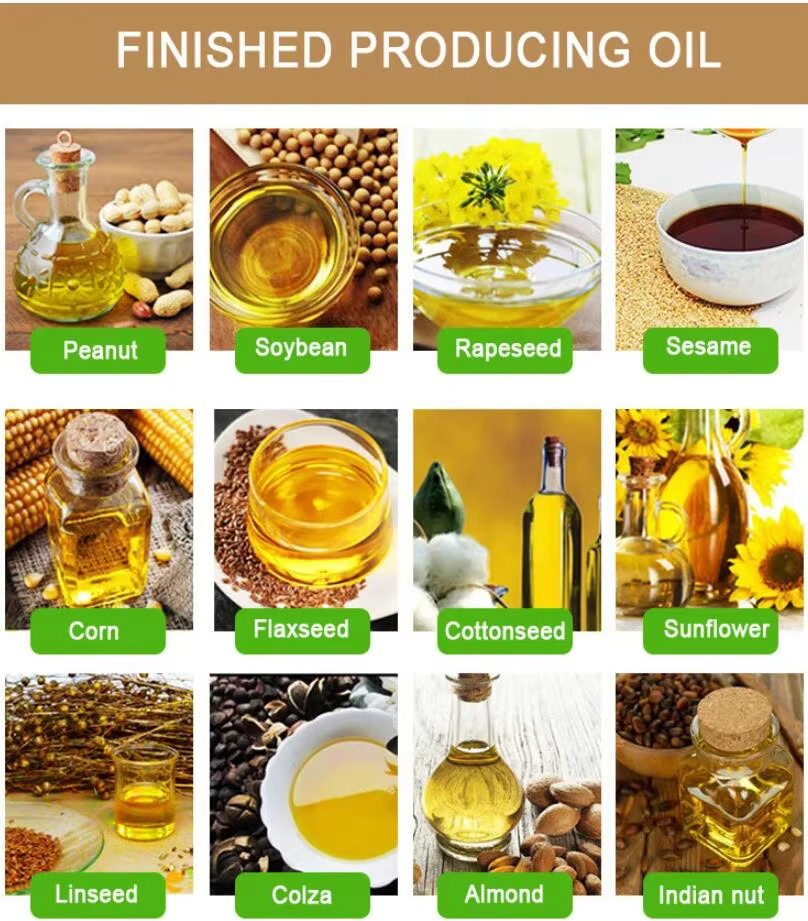
Introduction to Hydraulic Oil Press A hydraulic oil press is a device that uses the hydraulic principle to squeeze out grease from oil by applying high pressure. It is mainly composed of three parts: the main body, the transmission hydraulic system, and the electrical control system. A hydraulic oil press is a mechanical device that uses the hydraulic principle to extract vegetable oil. It is widely used in the food industry and the oil processing field, and can efficiently extract high-quality edible oil from various oil crops. With the growing global demand for natural and healthy food, hydraulic oil presses are popular in small and medium-sized oil processing plants and for home use due to their compact structure, easy operation, and high efficiency. A hydraulic oil press is a mechanical device that uses the hydraulic principle to extract vegetable oil. It is widely used in the food industry and oil processing field, and can efficiently extract high-quality edible oil from various oil crops. With the growing global demand for natural and healthy food, hydraulic oil presses are popular in small and medium-sized oil processing plants and for home use due to their compact structure, easy operation, and high efficiency.
Working principle of the hydraulic oil press The working principle of the hydraulic oil press is based on Pascal's law, that is, the pressure applied to any part of the closed liquid must be transmitted in all directions by the liquid according to its original size. Before the oil pressing process begins, the operator first needs to perform a series of preparations for the equipment. Clean the oil tank and add enough hydraulic oil to ensure that the transmission hydraulic system can operate normally. At the same time, carefully check whether the bolts of each part are firm and whether the line connection is correct to eliminate potential safety hazards. After everything is ready, turn on the preheating function and set the appropriate preheating temperature according to different seasons and oil types. Generally speaking, the preheating temperature in summer and autumn is controlled at 50 degrees - 70 degrees, and in winter and spring it is 70 degrees - 90 degrees. The preheating system adopts automatic control technology, without frequent manual intervention, and will automatically maintain a constant temperature when the temperature reaches the set value. The pretreatment of oil is an important part of the oil pressing process. Taking common oil crops such as peanuts, rapeseed, and soybeans as examples, they first need to be screened to remove impurities and stones to ensure the purity of the oil. Then the crushing process is carried out to properly crush the oil particles to increase their surface area in contact with the pressure, which is conducive to the extrusion of oil. Then steaming and frying are carried out to make the oil reach the best pressing state through heating and appropriate moisture adjustment. The purpose of steaming and frying is to activate the oil molecules in the oil, making it easier to separate from the oil cells, while improving the quality and flavor of the oil. After the pretreatment of the oil is completed, it is loaded into the pressing box. At this time, the motor is started, and the motor drives the transmission shaft to operate. Through the transmission devices such as worm gears, worms, and gear pumps, the mechanical energy is converted into hydraulic energy to drive the high-pressure pump to work. The high-pressure pump pressurizes the hydraulic oil and delivers it to the cylinder assembly. The piston in the cylinder moves upward under the action of the high-pressure oil, exerting huge pressure on the oil in the pressing box. As the pressure gradually increases, the oil in the oil begins to be squeezed out of the cells, flows out through the oil flow slits of the pressing box, and is collected in the oil storage barrel through the oil receiving tray. During the entire pressing process, the electrical control system monitors the pressure and temperature of the hydraulic system in real time. When the pressure gauge shows that the pressure reaches the set maximum value (such as 55 MPa), the electrical control system automatically controls the main motor to stop working to prevent excessive pressure from damaging the equipment. When the pressure of the pressing box drops to a certain level (such as 45 MPa) due to the compression of the oil, the electrical control system will automatically turn on the main motor to raise the pressure again to ensure that the pressing process continues until there is no oil leakage from the oil outlet of the pressing box, indicating that the oil in the oil has been basically squeezed out. After the pressing is completed, the operator lowers the pressing box by operating the manual valve, opens the upper top plate, and takes out the cake after the oil is squeezed. At this point, a complete oil pressing cycle is completed, and the equipment can be prepared for the next round of oil pressing operation.
Advantages of hydraulic oil presses
(I) High oil yield
Hydraulic oil presses can exert extremely high pressure, so that the oil is fully compressed under the action of a strong external force, thereby squeezing out the oil to the maximum extent. Compared with traditional oil pressing methods or some other types of oil presses, the oil yield of hydraulic oil presses is usually 2 to 3 percentage points higher. Taking the processing of peanuts as an example, for every 100 kilograms of peanuts processed, the use of hydraulic oil presses can produce an average of 2 to 6 kilograms of oil. For large-scale oil processing enterprises, this advantage can significantly improve the economic benefits of the enterprise. Even for small oil mills or home users, a lot of oil costs can be saved through higher oil yields over a long period of time.
(II) High-quality oil products
During the hydraulic oil pressing process, due to the use of physical pressing methods, no chemical additives or solvents are involved, and the nutrients and natural flavors in the oil can be completely retained. The squeezed oil is of high purity, clear color, rich fragrance, and does not contain solvent residues and soap content, which meets the pursuit of modern consumers for green and healthy food. For example, peanut oil extracted by hydraulic oil press retains the original unsaturated fatty acids, linoleic acid, vitamin E, and other nutrients of peanuts, and has a mellow taste, which is deeply loved by consumers. At the same time, this high-quality oil product has a higher price and stronger competitiveness in the market, which helps enterprises to increase the added value of their products.
Characteristics of hydraulic oil presses
(I) Compact structure and small footprint
The design of hydraulic oil presses focuses on the rational use of space and adopts a compact structural layout. Whether it is a small household model or a large industrial model, its footprint is relatively small. For small oil mills or home users, space resources are often a constraint, and the small size of hydraulic oil presses can well meet their needs. Only a small working area is needed to place the equipment and perform oil pressing operations. Even large industrial hydraulic oil presses have a significantly smaller footprint than some traditional large oil pressing equipment, which can save valuable production space for enterprises and improve space utilization.
(II) Excellent material, sturdy and durable
The key components of hydraulic oil presses, such as the main body column, the press assembly, and some parts of the transmission hydraulic system, are made of high-quality metal materials. For example, the main body is usually made of high-strength steel, which has undergone precision processing and heat treatment processes to give it extremely high strength and toughness, and can withstand long-term high-pressure operations without deformation or damage. Key parts in the transmission hydraulic system, such as gear pumps and high-pressure pumps, are made of special wear-resistant and corrosion-resistant steel to ensure the stability and reliability of the equipment during long-term operation. This excellent material selection and exquisite manufacturing process make the hydraulic oil press have a long service life. Under normal circumstances, the normal service life of the equipment can reach more than ten years or even decades, which greatly reduces the equipment renewal cost of users. (III) High degree of automation and intelligent control The advanced electrical control system gives the hydraulic oil press a high degree of automation and intelligence. The equipment has an automatic preheating function, which can automatically adjust the preheating temperature according to different oil types and ambient temperatures to ensure that the oil is squeezed in the best state. The hydraulic system pressure is also automatically controlled. When the pressure reaches the set value, the equipment automatically stops pressurizing, and when the pressure drops to a certain level, it automatically resumes pressurizing. The whole process does not require frequent manual intervention, ensuring the stability and consistency of the squeezing process. In addition, some high-end models of hydraulic oil presses are also equipped with remote monitoring functions. Users can view the operating status, various parameters and production data of the equipment anytime and anywhere through terminal devices such as
Packing method of the hydraulic oil press In order to ensure the safety of the hydraulic oil press during transportation and storage, a reasonable packaging method is essential. After the equipment is produced and debugged, it should be thoroughly cleaned and protected first. For the metal surface of the equipment, apply a layer of anti-rust grease to prevent rust due to environmental factors such as humidity during transportation. For key parts such as electrical control systems, waterproof and moisture-proof packaging materials are used to wrap them to ensure that they are not affected by the external environment. In the selection of packaging materials, sturdy wooden boxes or high-strength cartons are usually used. Wooden boxes have good compressive resistance and can effectively protect the equipment from collision and extrusion during transportation. For small hydraulic oil presses, customized carton packaging can be used, and the carton is filled with foam boards, bubble films, and other buffering materials to further enhance the protection of the equipment. During the packaging process, the various components of the equipment are placed in the packaging container according to a reasonable layout to ensure that the equipment will not shake or move during transportation. For large industrial hydraulic oil presses, due to their large size and heavy weight, professional lifting equipment is often required for packaging and handling. Before packaging, the equipment is disassembled, and each component is packaged separately, and then assembled and fixed in a wooden box or container. A large amount of cushioning materials, such as thick wooden boards, rubber pads, etc., are filled between the equipment and the packaging container to absorb vibration and impact during transportation. At the same time, obvious warning signs, such as "fragile items", "handle with care", "moisture-proof", etc., are posted on the outside of the packaging container to remind transportation personnel to pay attention to protecting the equipment. In terms of transportation, choose the appropriate transportation method based on factors such as the size, weight, and transportation distance of the equipment. For short-distance transportation, vans can be used for transportation to ensure the stability of the equipment during transportation. For long-distance transportation, rail transportation or road and rail combined transportation is usually selected to ensure that the equipment can reach its destination safely and quickly.
Product parameter table
| Model | WSGH-180 | WSGH-260 | WSGH-300 |
| Average productivity | 20kg/h | 50kg/h | 100kg/h |
| Power | 1.1kw | 1.5kw | 3kw |
| Heating temperature | 2kw | 3kw | 3kw |
| Weight | 520kg | 780kg | 1500kg |
| Size | 750*800*1200mm | 900*800*1450mm | 1030*880*1700mm |
Oil extraction rate with different materials
| Raw material | Output oil rate (%) | Cake thickness(mm) | Dry cake left oil rate ( %) |
| sesame | 44-55 | 1.0-1.5 | <=6 |
| peanut | 40-50 | 0.8-2 | <=7 |
| rapeseed | 30-40 | 1.0-1.5 | <=7 |
| Sunflower seed | 32-40 | 1.2-1.5 | <=7 |
| soybean | 10-16 | 0.8-1.5 | <=6 |
| Cotton seed | 11-25 | 1.0-2.0 | <=6 |
| Walnut | 42-52 | 0.8-1.5 | <=6 |
| Flax | 32-38 | 1.0-1.2 | <=6 |
| Camellia seed | 26-38 | 1.0-1.2 | <=6 |
| Oumpkin seed | 40-42 | 1.0-1.2 | <=6 |