COMPATIBLE FEEDSTOCK
Our gasifier is capable of processing a wide variety of biomass, including wood, wood chips, corn cobs, corn stalks, wheat straw, rice husks, peanut shells, nut shells (such as walnut, macadamia, pistachio, coconut, hazelnut, and chestnut), as well as discarded cardboard boxes and other agricultural biomass materials.
Note: Our compatible feedstock extends beyond the listed items. Please
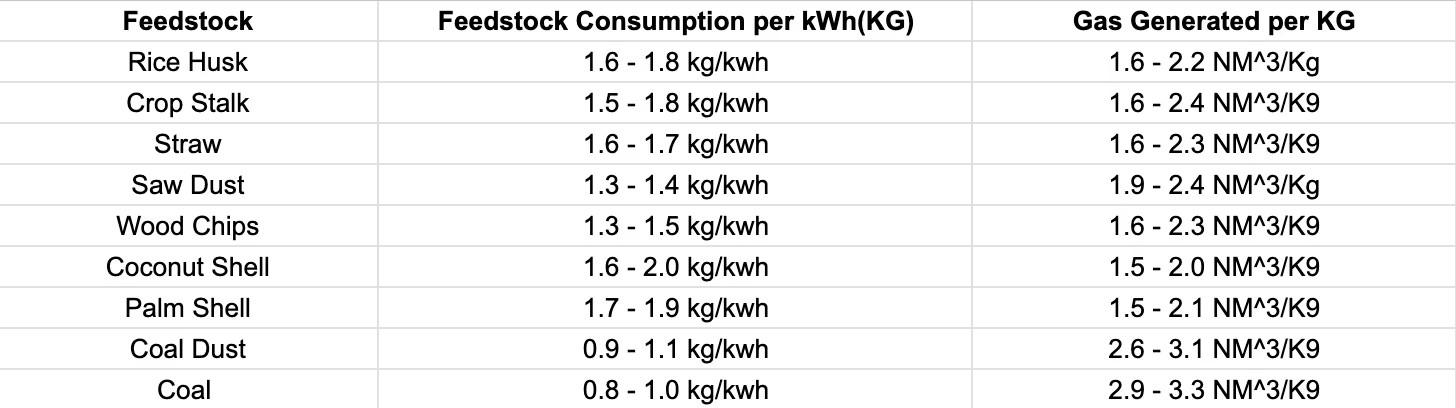
FEEDSTOCK CONSUMPTION RATE
Note
The feedstock consumption rate may fluctuate within a certain range due to different moisture levels after drying and variations in biomass feedstock.The provided data pertains to fluid bed gasifying furnaces. For fixed bed gasifying furnaces, feedstock consumption is expected to be higher than the figures stated here.The data presented is based on our engine. If customers choose to use an engine from another manufacturer, there may be fluctuations in the data.SYNGAS COMPOSITION
Normally, after our gasification process, the calorific value is more than 5.83 MJ/Nm³, and the tar and dust levels are less than 23 mg/Nm³, with a treated temperature lower than 45 degrees Celsius.
BRIEF
Biomass gasification allows the conversion of different biomass feedstocks to a more convenient gaseous fuel that can then be used in conventional equipment (e.g., boilers, engines, and turbines) or advanced equipment (e.g., fuel cells) for the generation of heat and electricity.
offers the best biomass power plant and gasifiers on the market. We provide solutions in different sizes and capacities to suit your needs, no matter which feedstocks you are using. With our customized service, you have ultimate flexibility when it comes to designing a gasifier that meets your specific requirements.
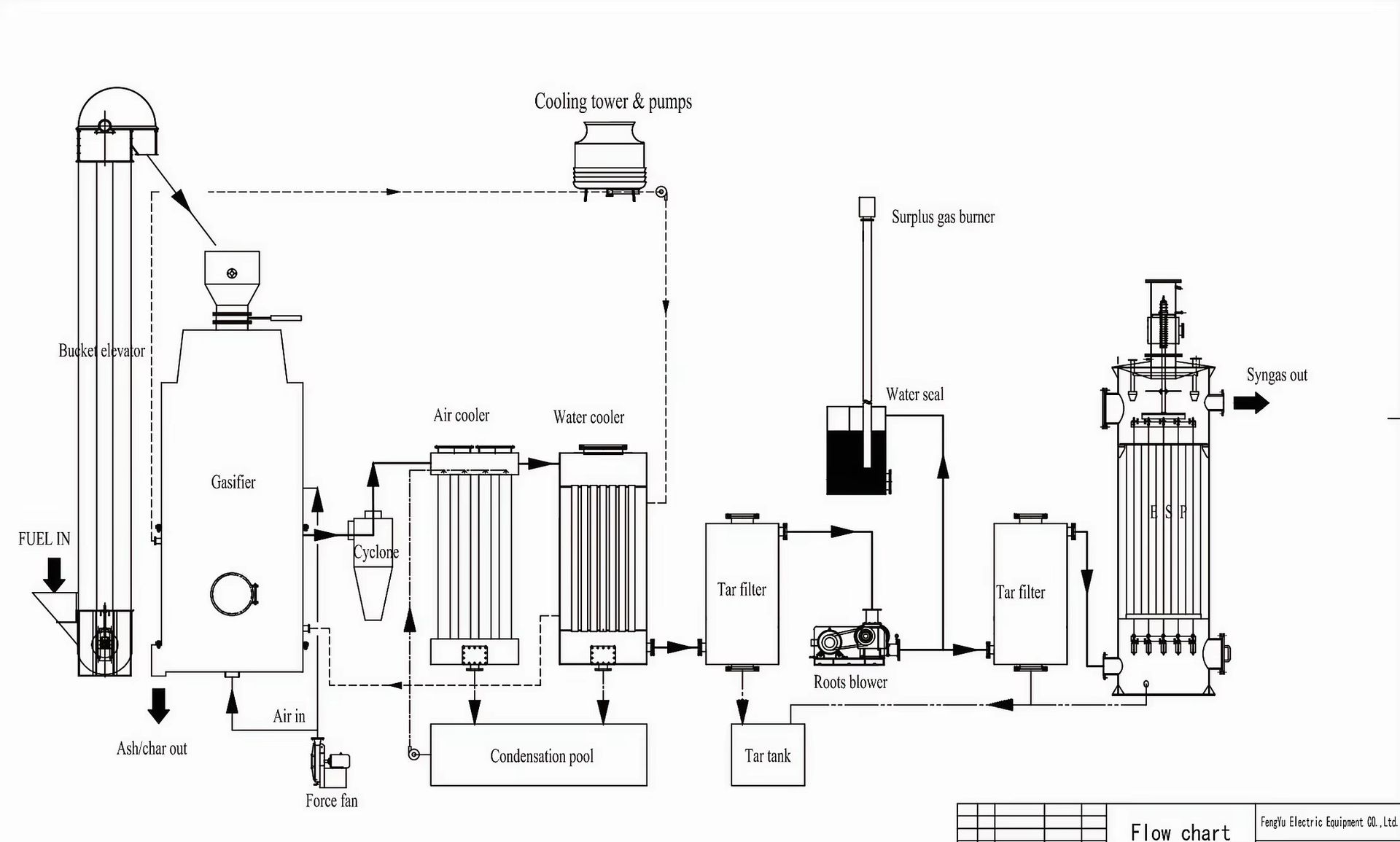
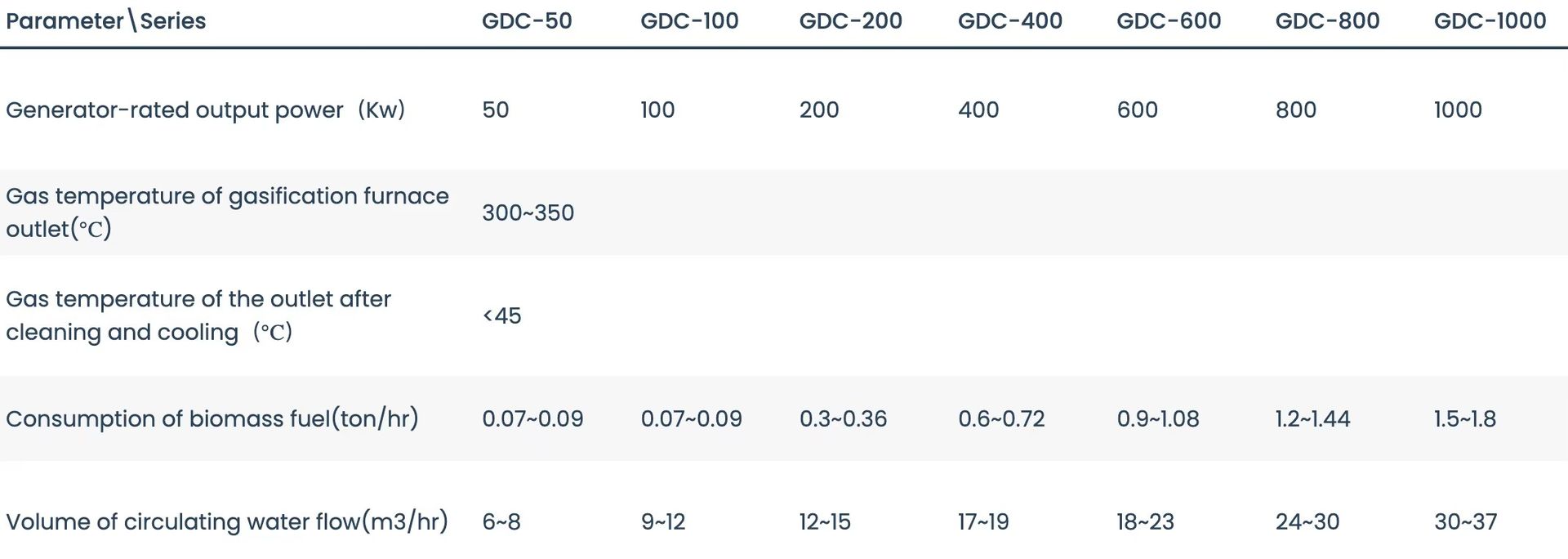
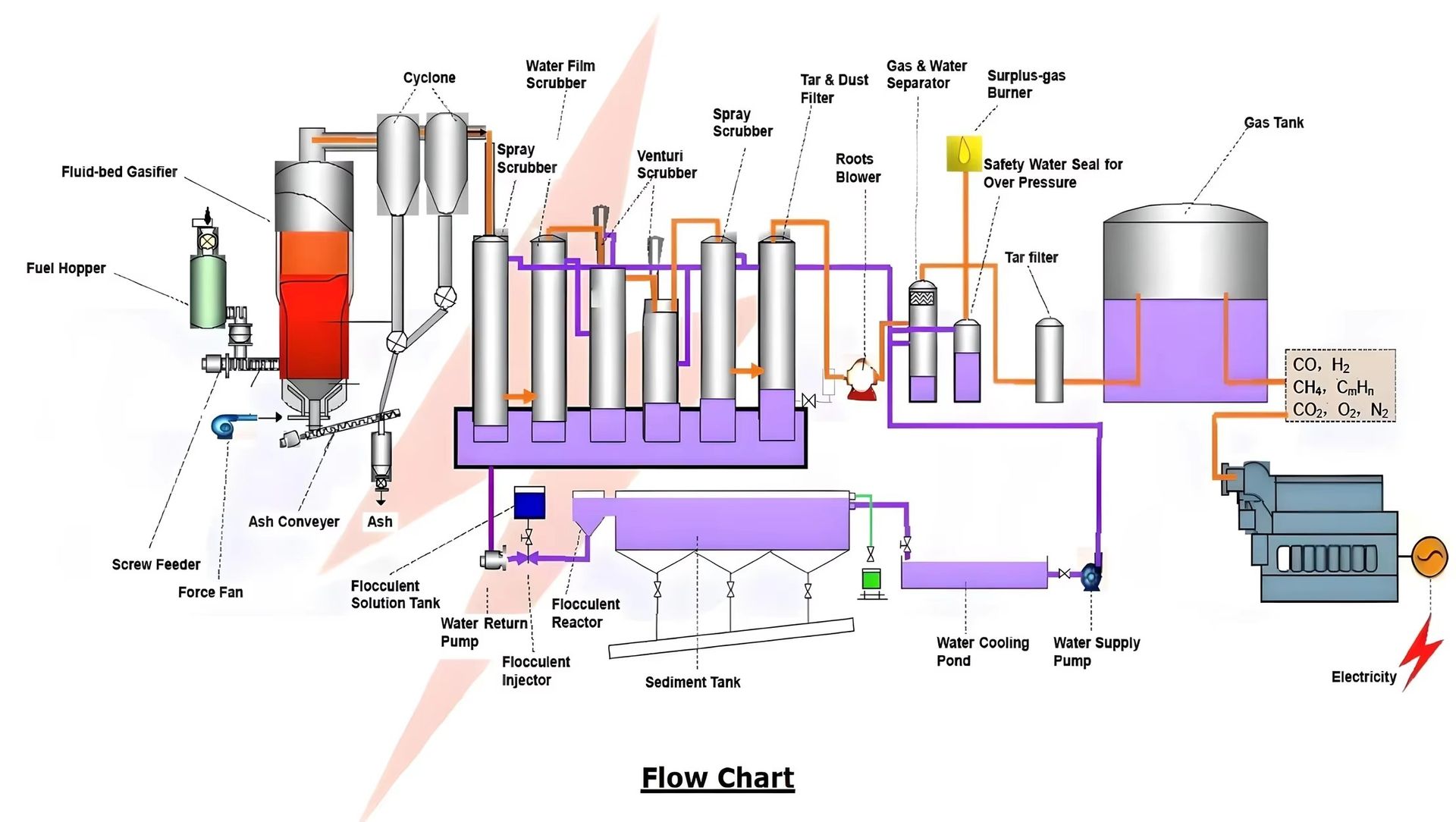
GASIFICATION FLOW CHART & SPECIFICATION
FIXED BED GASIFICATION SYSTEM
FLUIDIZED BED GASIFICATION SYSTEM
CLEANING SYSTEM
Ash Removing
Dry Type (screw-conveyor collection & discharge)
Gas Cleaning & Cooling System
The fluidized bed gasification system is suitable for large-scale applications, and we have successfully operated it in the range of 200 to 2MW. The advantages of fluidized bed gasification include stability without local combustion phenomena, high gas heating value, and higher efficiency compared to fixed bed gasification. It is well-suited for continuous 24-hour operation and is ideal for driving gas engines for power generation. (Stability is paramount)
In gasification with biomass as the feedstock, tar is typically present in the syngas. We employ a wet purification system because we believe it is the most suitable for biomass gasification power generation. The wet system can run continuously, with tar precipitating into the washing solution, which then goes directly into the cooling tower water for recovery and treatment. If a dry cleaning system were used, tar deposits would adhere to the cooler walls, making maintenance considerably more challenging. (Wet scrubbing performs well, ensuring greater stability)
Our fluidized bed gas purification system employs stringent cooling measures, including three dry particle separators, six washings, one water-gas separator, two filters, and one electrostatic precipitator, all to ensure excellent gas quality. With our extensive experience gained from running multiple projects over the years, starting from the first 98 years of the Thai rice husk gasification project, we are the best choice for operating gasifiers with wood chips, rice husks, and straw.
GLOBAL PROJECTS
For more information and to explore our project gallery, please visit our
On our
TRANSPORTATION & INSTALLATION
Extensive Industry Experience: With years of expertise, we ensure seamless transportation and installation of biomass gasification systems.On-Site Support: Our expert engineers will be sent to your location to supervise and guide the installation process.Safety & Insurance: We prioritize safety throughout the installation, adhering to strict safety standards and providing full insurance coverage.Employee Training: We offer comprehensive on-site training for local employees, ensuring proper and safe operation of the equipment.Reliable Operation: Our hands-on approach ensures that your system operates efficiently and performs reliably over the long term.Flexible Transportation Options
Depending on your location, we offer a variety of transportation methods, including sea freight, rail, and road transport, to ensure timely and efficient delivery.
QUICK Q&A
How do I know which models fit my project?
Determining the most suitable models for your project depends on the characteristics of the feedstock, notably its quantity, caloric value, and moisture content, which directly impact electricity generation. The expected hourly electricity yield influences the gasifier's size. Typically, feedstock with less than 15% moisture content and grain sizes equal to or smaller than 10 mm is recommended for fluidized-bed gasifiers. Conversely, feedstock with larger sizes and 15% or higher moisture content needs to be pelletized into briquettes before processing in fixed-bed gasifiers.
What is recommended to prepare before sending the inquiry?
What's advised before sending your inquiry is to have a caloric report for the feedstock, the geographical specifics of the project site (including altitude and temperature), the expected hourly electricity generating capacity, and the operational schedule (whether it's continuous 24/7 or an 8-hour-per-day operation). Having these details allows us to promptly and accurately respond with a quotation. If you don't have all the information, it's fine, but providing at least the feedstock details would enable us to offer a general quotation and plan.
Can mixed feedstock be processed together?
Yes, mixed feedstock can often be processed together in gasification. Gasifiers are designed to handle various types of feedstock, including mixtures of different materials like biomass, coal, municipal solid waste, or agricultural residues. The success of processing mixed feedstock together depends on several factors, including the composition of the materials, particle size, moisture content, and the design of the gasification system. Adjustments to the gasification parameters may be needed to optimize the process.